
Sound
What You Hear
Often a brief popping or cracking sound — gas releasing from the joint fluid, similar to knuckle cracking. A silent adjustment can still be effective.
Sensation
What You Feel
Brief pressure and a quick, controlled movement. Most people describe relief or a looser feeling. Mild soreness afterward, like after new exercise, can occur for a day or so.
Technique in practice
The setup, shown before it is felt.
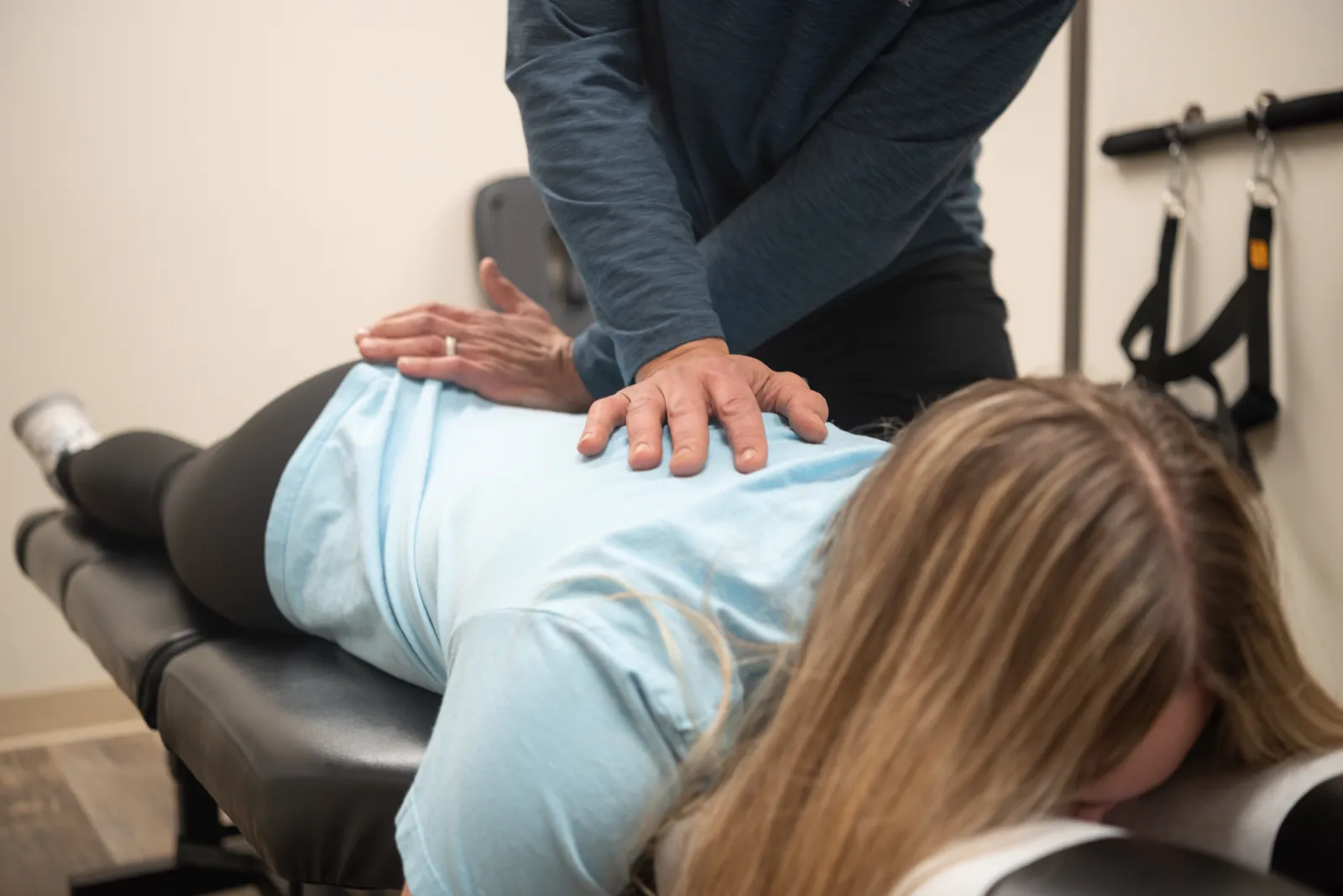
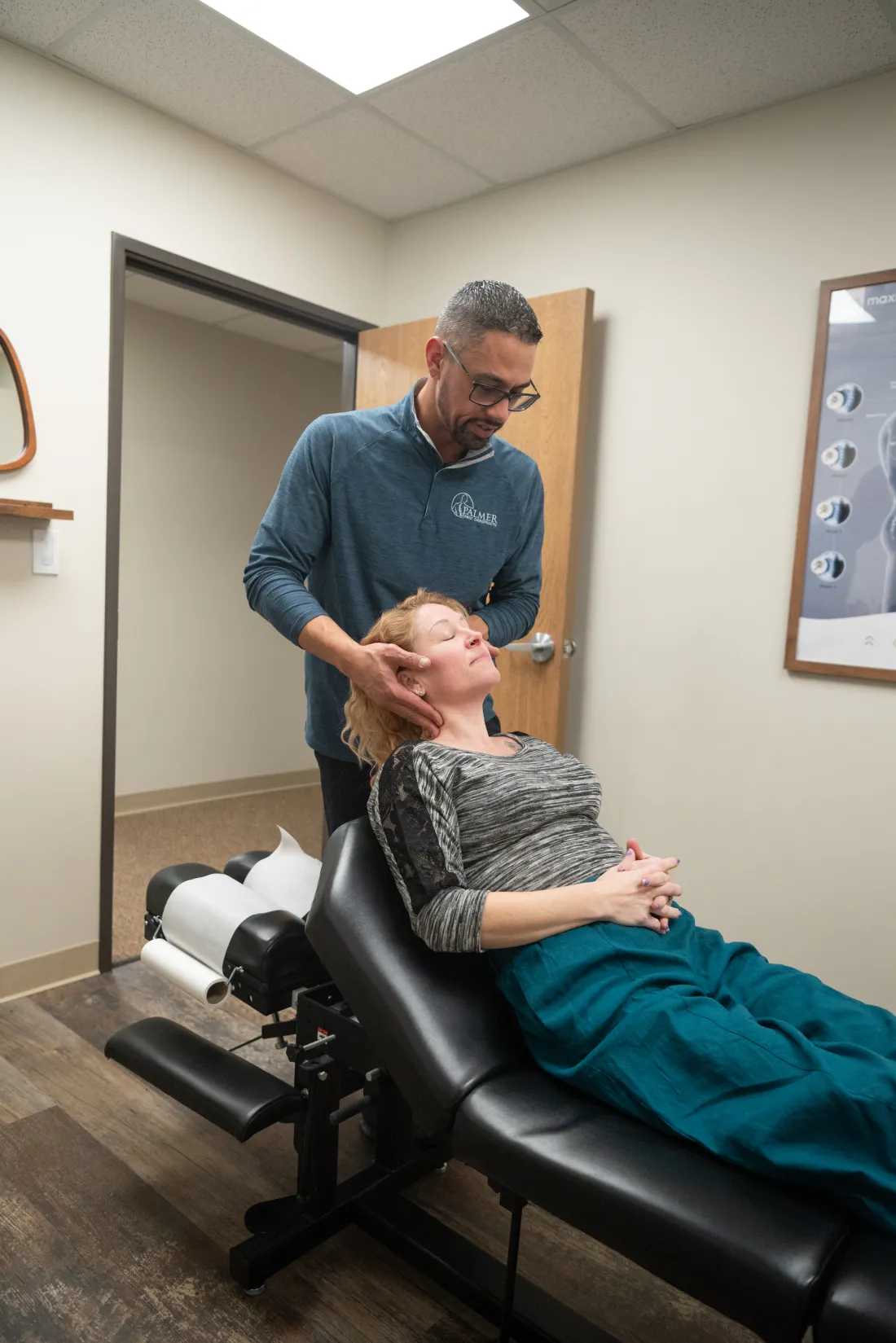
How it works
You lie on a padded adjusting table, positioned so the specific joint being addressed is isolated. Dr. Palmer uses his hands to apply a quick, controlled, small-range movement to that joint. The setup takes longer than the adjustment itself, which lasts a fraction of a second.
The sequence
- Dr. Palmer explains which area he is addressing and why, based on your exam.
- You are positioned on the table — lying on your side, face down, or seated, depending on the area.
- He takes up gentle pressure first, so nothing is a surprise.
- The adjustment is a single quick movement. You may hear a pop; you may not.
- He checks how the area feels and moves afterward.
You can ask him to pause, explain, or stop at any point. That is normal, not rude.
Before Treatment
Questions Worth Asking Before Treatment
- 01 Why did you choose this technique for me?
- 02 What should the adjustment feel like — and what should it not feel like?
- 03 What do I do if I feel sore tomorrow?